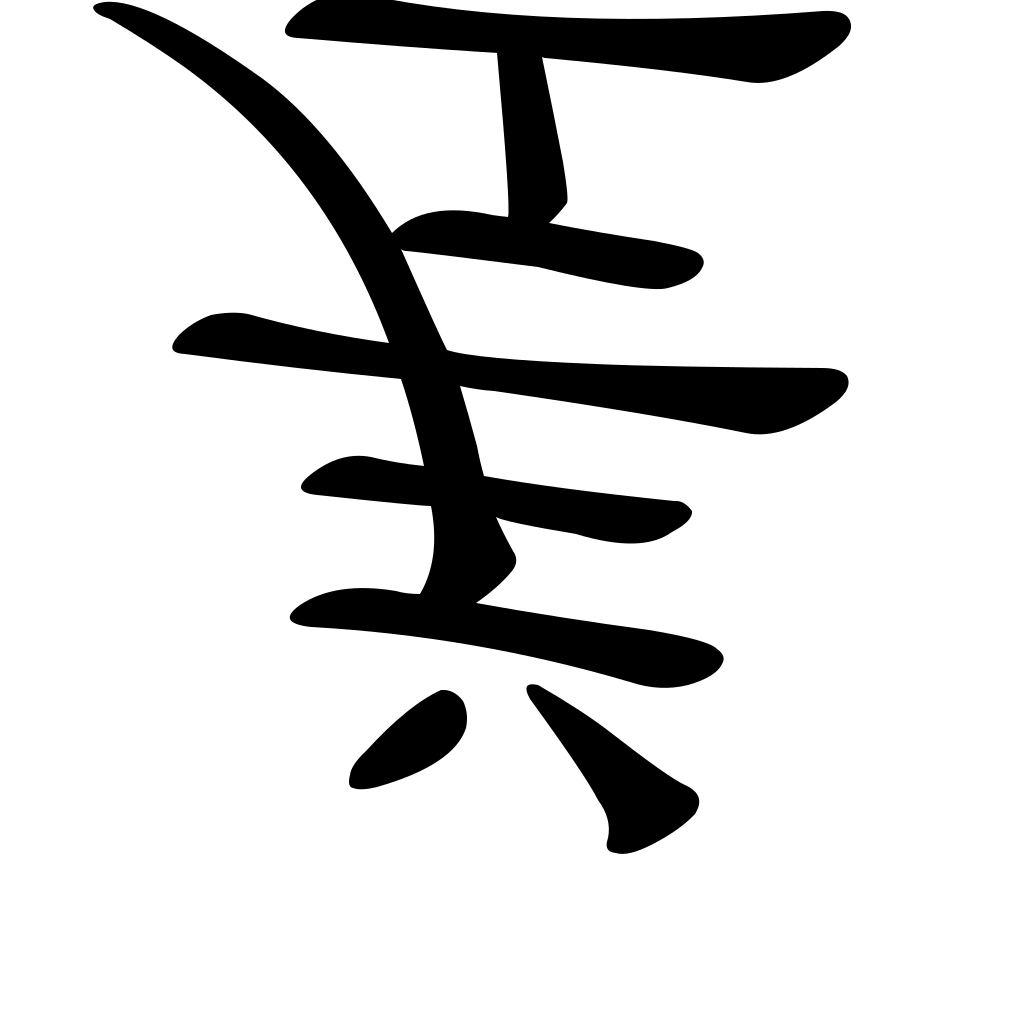
差 (chà), meaning "difference" or "error," originated from oracle bone script depicting a hand holding a tool (like a measuring instrument) working on an object, suggesting the act of comparing or testing. The top part 羊 (sheep) and the bottom portion work together to convey the sense of deviation or mistake — what happens when something does not match the standard. In modern usage, 差 means "poor" or "inferior" (as in 差劲, "no good"), as well as "difference" (as in 差别, "difference"), and "wrong" (as in 错了, "wrong"). The character beautifully illustrates how ancient concepts of measurement and comparison evolved into modern expressions of error and inadequacy.